By Dr. Piyawat POOMSUWAN, Dr.Tiwanun PROMVARANON



Why Does Melasma Keep Coming Back — Even After Years of Treatment?
Many women share the same frustrating experience.
They apply whitening creams.
They undergo multiple laser sessions.
The melasma fades for a while…
only to return again.
This raises an important question:
Why does melasma always come back?
Melasma Is More Than Just Pigment on the Skin
Over the past decade, dermatological research has revealed an important new understanding.
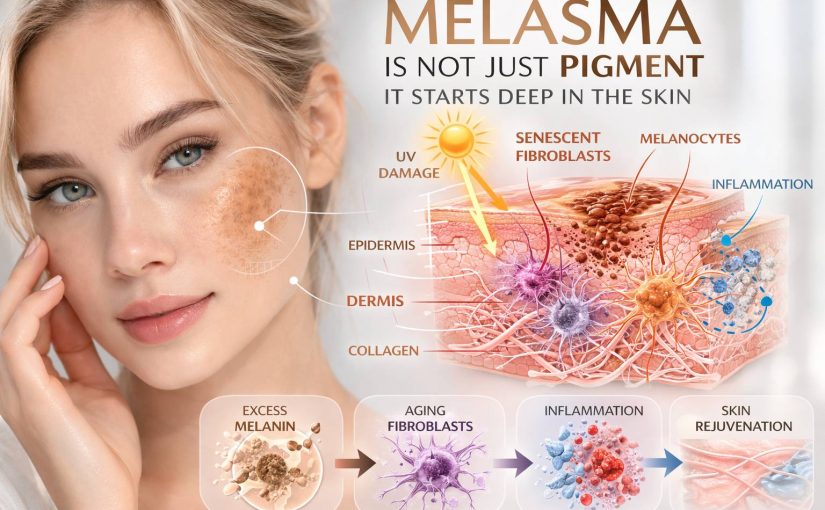
Melasma is not merely a pigmentation disorder on the skin surface. Instead, it is increasingly recognized as a photoaging-related skin disorder involving structural changes within the skin.
In other words, melasma does not exist only in the epidermis.
The Traditional Understanding of Melasma
In the past, doctors believed melasma was primarily caused by overactive melanocytes producing excessive melanin.
Therefore, treatment strategies focused on reducing pigment using:
– Topical depigmenting creams
– Whitening agents
– Laser treatments
While these methods can lighten melasma temporarily, they often fail to prevent recurrence.
The Real Cause: Aging Fibroblasts in the Dermis
Recent scientific studies have uncovered a deeper mechanism.
In areas affected by melasma, significant changes occur in the dermis, particularly in a type of cell known as fibroblasts.
Researchers have found that melasma‑affected skin contains senescent fibroblasts — aging, dysfunctional skin cells. These cells are believed to play a key role in triggering melasma development.
What Causes These Senescent Cells?
Senescent fibroblasts develop due to cumulative damage from:
– Chronic sun exposure
– UV radiation
– Natural aging
– Environmental pollution
As these cells age, they release multiple biological signals, including melanogenic cytokines, growth factors, and inflammatory mediators. These substances stimulate melanocytes, causing them to produce more melanin.
This explains why melasma often returns repeatedly, even after successful treatment.
Why Can Laser Sometimes Make Melasma Worse?
Some patients notice that after laser treatment, their melasma becomes darker instead of lighter.
This occurs when treatment focuses only on removing pigment but does not address the underlying dermal damage.
When the dermal environment remains abnormal, melanocytes can be stimulated again, leading to:
– Rebound Melasma (recurrence after treatment)
– Post‑Inflammatory Hyperpigmentation (PIH) after laser procedures.
A Global Shift in Melasma Treatment
Because of these discoveries, dermatologists worldwide have begun shifting their treatment approach.
Instead of treating melanin alone, modern strategies address the entire skin microenvironment.
The New Concept in Melasma Treatment
Modern melasma therapy must address three levels simultaneously:
1. Pigment Control – reducing melanin production using pigment lasers, topical depigmenting agents, and whitening therapies.
2. Inflammation Control – reducing oxidative stress and chronic inflammation that stimulate melanocytes.
3. Dermal Rejuvenation – restoring skin structure by targeting senescent fibroblasts and improving the skin microenvironment.
Why Melasma Treatment at Piyawat Clinic Is Different
At Piyawat Clinic, melasma is treated using the concept of “Melasma as a Skin Ecosystem Disease.”
This means melasma is not caused by pigment alone but arises from the entire skin environment. Treatments therefore use a multi‑layered approach tailored to the degree of skin aging.
Treatment Programs
Gentle Brightening Program (for mild skin aging)
This program includes:
– A 4‑step laser protocol
– Multivitamin Blend skin therapy
Designed to gradually brighten the skin while restoring balance.
Total Age‑Lock Program (for more advanced skin aging)
This intensive rejuvenation program includes:
– A 4‑step laser protocol
– UltraDeep Stem Rejuvenation
– RF Ultra Lift technology
These treatments target deeper dermal aging processes and restore the skin microenvironment.
Each individual’s skin concerns are unique. It is recommended to consult a medical specialist for a comprehensive evaluation and a personalized treatment plan tailored specifically for you.
Scientific References
1. Kim JY, et al. Senescent fibroblasts in melasma pathophysiology. Experimental Dermatology. 2018;27(7):719-722.
2. Passeron T. Melasma pathogenesis and influencing factors – an overview of the latest research. Journal of the European Academy of Dermatology and Venereology. 2013;27(Suppl 1):5-6.
3. Kang HY, et al. The pathophysiology of melasma. Journal of Investigative Dermatology Symposium Proceedings. 2009;14(1):4-8.
4. Grimes PE. Melasma: Etiologic and therapeutic considerations. Archives of Dermatology. 1995;131(12):1453-1457.
5. Torres-Álvarez B, et al. Histochemical and immunohistochemical study in melasma: Evidence of damage in the basal membrane. American Journal of Dermatopathology. 2011;33(3):291-295.
6. Lee DJ, et al. Defective barrier function in melasma skin. Journal of the European Academy of Dermatology and Venereology. 2012;26(12):1538-1543.
7. Handel AC, Miot LDB, Miot HA. Melasma: A clinical and epidemiological review. Anais Brasileiros de Dermatologia. 2014;89(5):771-782.