Gentle, Effective Brightening for Asian Skin

By Dr.Piyawat POOMSUWAN


Are you tired of seeing stubborn dark patches on your cheeks?

For many of us, melasma is a frustrating companion that seems impossible to shake. You may have tried whitening creams or chemical peels with little success. However, recent research conducted specifically on Japanese skin reveals that not all laser treatments are created equal.

​Here is what you need to know to clear your skin safely and effectively, based on the latest scientific findings.

​1. The Gentle Revolution: Why “Laser Toning” Wins

​For years, doctors used strong lasers (like the Ruby laser) to blast away pigment. While this removed spots quickly, it often caused damage to the skin cells, leading to inflammation and—worst of all—the melasma coming back even darker shortly after.

​A comparative study by Japanese doctor and colleagues specifically tested two laser types on Japanese women. The results were clear:

  • ​** The Old Way (Ruby Laser):** acted like a “sledgehammer.” It destroyed the pigment but also damaged the surrounding skin cells, causing necrosis (cell death). This damage triggered the skin to produce more pigment as a defense mechanism, leading to high recurrence rates.
  • The New Way (Nd:YAG Laser Toning): acted like a “smart eraser.” It used low energy to gently break down melanin granules without killing the skin cells. Because the skin wasn’t “angry” or damaged, the results lasted much longer, and the skin looked healthier.

The Takeaway: For Asian skin, “Slow and Gentle” is the secret to success.

​2. Not All Machines Are the Same: Quality Matters

​When you see laser treatments advertised at shockingly low prices, be careful. The market is flooded with low-efficiency, cheap laser machines.

  • The Risk: Cheap machines often have unstable energy outputs. This can lead to ineffective treatment (wasting your money) or, worse, energy spikes that burn your skin and cause permanent dark spots.
  • The Standard: Always check if the clinic uses a machine approved by the USFDA (U.S. Food and Drug Administration). These machines undergo rigorous testing to ensure the energy beam is stable, precise, and safe for your delicate facial skin. Your face is an investment—don’t compromise on quality.

​3. The Doctor’s Touch: Experience is Key

​Having a Ferrari doesn’t make you a race car driver. The same applies to medical lasers. The effectiveness of the treatment depends heavily on the doctor’s skill.

​In the successful study, the doctors knew exactly how to set the laser (Low Fluence, multiple passes). They looked for a “mild redness” on the skin as the stopping point. An inexperienced operator might use energy that is too high.

Advice: Choose a clinic where the doctor assesses your specific skin type and adjusts the settings personally, rather than a place that uses a “one-setting-fits-all” approach.

​4. Patience Pays Off: Consistency is Queen

​Treating melasma is a marathon, not a sprint. The “Laser Toning” method works by gently chipping away at the pigment layer by layer.

  • Don’t expect overnight miracles: In the study, significant improvement was seen after 3-4 consecutive weekly sessions.
  • Stick to the plan: Skipping sessions or stopping too early can hinder your progress. Regular treatments help train your skin to stop overproducing pigment.

​5. Your Homework: Daily Care to Prevent Return

​The laser does the heavy lifting, but your daily habits determine if the results stay. Melasma is sensitive to sunlight. To ensure your clear skin lasts for years (like the patients in the study who stayed clear for over 2 years!):

  • Strict Sun Protection: UV rays are the #1 trigger. Use a high SPF broad-spectrum sunscreen every single day, even when indoors.
  • Brightening products: Ingredients such as vitamin C, Natural Whitening cream support the laser results.
  • Hydrate: Keep your skin barrier strong with good moisturizers.

Conclusion:

You don’t have to live with melasma forever. By choosing the right technology (low-fluence Nd:YAG), a high-quality USFDA-approved machine, and an experienced doctor, you can safely reveal the bright, beautiful skin you deserve.

Part of the medical insights in this article is supported by the research of Omi T. and colleagues (2012), published in Laser Therapy, which compared Nd:YAG laser toning with ruby laser treatment in Japanese women with melasma.

Gentle, Effective Brightening for Japanese Skin (Jn)

By Dr.Piyawat POOMSUWAN

日本人の肌に優しく効果的なブライトニング

QスイッチNd:YAGレーザートーニングによるシミ・肝斑治療の新しい選択肢**


頬にできる「シミ・肝斑・色むら」。

どんなにスキンケアを頑張っても、なかなか薄くならない…

そんな悩みを抱える女性は、日本でも非常に多く見られます。


美白クリームやピーリングを試しても効果が続かない、逆に肌が敏感になってしまう──。

そんな経験はありませんか?


近年、日本人女性を対象とした医学研究により、

「すべてのレーザーが同じように効果的ではない」 ことが明らかになってきました。


そして、アジア人の肌により適した

“やさしく、長く続く” 美白治療 が注目を集めています。

それが QスイッチNd:YAGレーザートーニング です。


  1. 1. 肌にやさしい治療が鍵:なぜレーザートーニングが優れているのか


従来のシミ治療レーザー(ルビーレーザーなど)は強いエネルギーでメラニンを破壊します。確かに色は早く抜けますが…

周囲の細胞まで傷つけてしまう炎症が起きやすい

その結果、肝斑が“より濃く”再発することも


日本人女性を対象とした研究では、

ルビーレーザーとNd:YAGレーザートーニング を比較したところ、明らかな差が出ました。


■ ルビーレーザー(従来型)

「大きなハンマーで叩く」ようにメラニンを壊す

→ 早いが炎症・細胞死が多く、再発しやすい


■ Nd:YAGレーザートーニング(新しいアプローチ)

「繊細な消しゴム」でやさしくメラニンを削るイメージ

→ 細胞を傷つけないため炎症が少なく、長期間きれいな状態が続く


アジア人の肌には “弱く、丁寧に” がもっとも効果的 とされています。


  1. レーザーは同じに見えて、実は大きな違いがある


— クリニック選びの重要ポイント**

近年、低価格のレーザー機器が多く出回っていますが、

これらの安価な機器には大きなリスクがあります。

出力が不安定 → 効果が弱い

出力が急上昇することがある → 火傷や色素沈着の原因

肝斑の悪化につながる可能性も


信頼できるクリニックは USFDA(アメリカ食品医薬品局)認証 など、

厳しい基準をクリアした医療機器を使用しています。

大切な顔だからこそ、機器の品質には妥協しないことが大切です。


  1. 医師の技術と経験が結果を大きく左右する


最新の機器があっても、

設定を誤ればトラブルや効果不足につながります。

経験豊富な医師は以下のポイントを正確に判断できます:

適切なエネルギー値

何回パスするか(passes)

肌がどのタイミングで赤みを示すべきか

炎症や色素を刺激しすぎない方法

肌質に合わせた治療計画の調整

研究でも、

正しい“低フルエンス・多パス”設定が安全性と効果の鍵

であることが示されています。


  1. 肝斑は“慢性疾患”


— 継続治療でこそ美しい結果が長続きする**

レーザーで改善しても、

治療を途中でやめてしまうと肝斑は再発しやすい性質があります。


おすすめの治療ペースは


  • 2週間に1回 × 3〜6回程度
  • 改善後は 1〜2ヶ月に1回の維持治療
  • 美白クリームなどのスキンケアを併用
  • 継続こそが最も大事なポイントです。


  1. レーザー後の“ホームケア”で結果が大きく変わる


レーザーがメラニンを減らしても、

日常の生活習慣が悪いと、シミはすぐ戻ってしまいます。


日焼け止めは毎日必須

UVだけでなく、室内光やブルーライトも肝斑の原因に。


肌のバリアを強化

保湿と美白の両方を重視。

例:ビタミンC・Whitening cream など


刺激の強いケアは避ける

スクラブ、ピーリングのしすぎは逆効果。


医師のスケジュールを守る

適切な頻度で治療することで、

研究では1年以上良い状態を保てた例も報告されています。


まとめ


  • 肝斑やシミに悩むすべての女性へ。

あなたはもう「どうせ治らない」と諦める必要はありません。

  • QスイッチNd:YAGレーザートーニング
  • 信頼できる認証機器
  • 経験豊富な医師
  • 適切なホームケア


この4つが揃えば、

やさしく・安全に・長く続く美白効果 を手に入れることができます。


参考文献(出典)


本記事の一部の内容は、Omi ら(2012年)が『Laser Therapy』誌に発表した、日本人女性におけるNd:YAGレーザートーニングとルビーレーザーの肝斑治療効果を比較した研究を参考にしています

Hair and Scalp Aging (Cn)

頭髮老化:因年齡增長導致的脫髮與髮量減少

揭開“根本之美”的秘密,了解「Hair Aging 頭髮老化」現象,以及如何保持頭皮的年輕狀態

當「頭皮」開始老化……「頭髮」也將悄悄告別

我們熟悉如何保養臉部肌膚以保持年輕,避免皺紋與鬆弛,但你知道嗎?頭皮也會隨著年齡老化。這些肉眼難以察覺的微小變化,可能正是導致髮絲變細、乾燥、白髮、甚至脫落的重要原因。

頭髮老化:髮質變弱不只是遺傳問題

儘管遺傳確實會影響頭髮特質,但毛囊所處的環境更是關鍵!當頭皮因年齡、污染、或更年期後的荷爾蒙變化而老化時,毛囊會逐漸退化、功能變慢,導致長出的頭髮越來越細、稀疏,甚至中斷生長週期。

頭皮邁入「老化期」的警訊

– 頭髮變得稀疏
– 頭皮乾燥、脫屑或對刺激變得敏感
– 新生頭髮生長變慢,或僅有細小軟弱的髮絲
– 提早出現白髮
– 洗完頭後仍感覺髮絲扁塌、無蓬鬆感

頭皮老化的原因

– 年齡增長:毛囊周圍的組織萎縮,毛孔縮小
– 荷爾蒙下降:尤其是女性體內雌激素減少,造成頭皮乾燥、彈性變差
– 陽光與空氣污染:導致頭皮與毛囊輕微發炎,自由基破壞膠原蛋白
– 不當的護髮方式:如使用刺激性洗髮精、經常染燙拉直,卻缺乏護理
– 營養不均衡:缺乏維生素B群、維生素D、鋅、必需胺基酸等頭髮必需營養素

如何讓「老化的頭皮」重現年輕活力?

– 選用專為頭皮設計的洗髮與護髮產品:建議選擇天然有機產品,不含硫酸鹽、矽靈、合成香精與防腐劑,降低對頭皮與毛囊的刺激。
– 攝取有益頭髮健康的食物:如鮭魚、堅果、深綠葉蔬菜、雞蛋與全穀類。
– 減少壓力並保持充足睡眠:壓力荷爾蒙會直接干擾毛髮的生長週期。
– 保持規律運動:有助於促進血液循環、減輕壓力、調節荷爾蒙。
– 補充有助於養髮的營養素:如維生素B群、維生素D、鋅與胺基酸。
– 選擇天然產品以促進頭皮血液循環:如中藥補血類產品等。
– 諮詢專業醫師進行診斷與治療:如頭皮顯微鏡分析、分段雷射(Fractional Laser)或頭髮活化針劑(Hair Mesotherapy)等療法。

結語

脫髮與髮量減少是每個人都有可能面對的問題,而老化是常見原因之一。從內而外的保養、避免外部刺激、以及及早進行護理與治療,將有助於您長久維持年輕亮麗的秀髮。

Hair and Scalp Aging

Hair Aging: Thinning Hair from the Aging Process

Discover the Secret Behind “Beauty from the Roots” with the Phenomenon of Hair Aging and How to Keep Your Scalp Youthful

When the Scalp Ages… the Hair Begins to Say Goodbye

We’re familiar with caring for our facial skin to stay youthful—avoiding wrinkles and sagging—but did you know that the scalp also ages? And these subtle, often invisible changes can be a major cause of thinning, dry, graying, or shedding hair.

Hair Aging: Fragile Hair Isn’t Always Just Genetic

While genetics do influence hair characteristics, the environment of the hair follicles plays a more significant role than most people think. As the scalp ages—whether from natural aging, pollution, or hormonal changes (especially after menopause)—the hair follicles begin to weaken. They slow down, produce thinner and finer hair strands, or stop generating new hair altogether.

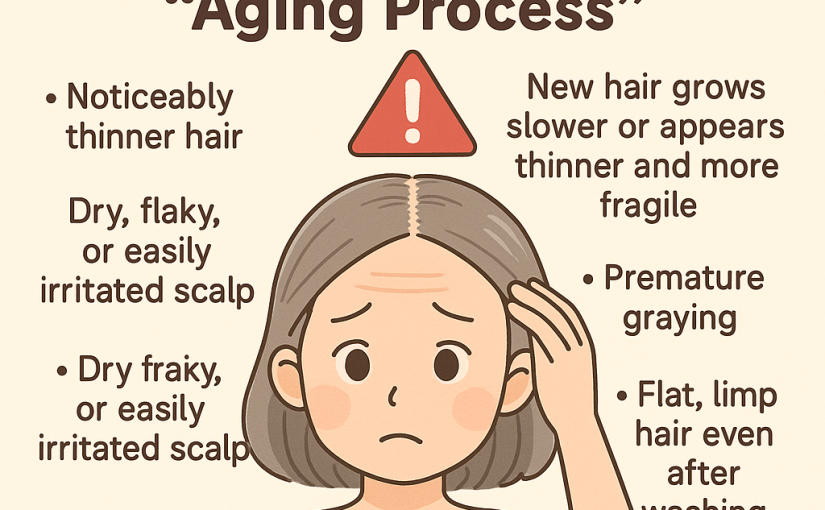
Warning Signs Your Scalp is Entering “Menopause”

– Noticeably thinner hair
– Dry, flaky, or easily irritated scalp
– New hair grows slower or appears thinner and more fragile
– Premature graying
– Flat, limp hair even after washing

What Causes Scalp Aging?

– Aging: Tissues around the hair follicles shrink, and the follicles themselves become smaller.
– Hormonal decline: Especially the drop in estrogen in women, leading to dry, less elastic scalp skin.
– Sunlight and pollution: Cause low-grade inflammation in the scalp and hair follicles. Free radicals damage scalp collagen.
– Improper hair care: Harsh shampoos, frequent dyeing, perming, or heat styling without proper nourishment.
– Nutrient deficiencies: Lack of essential vitamins (e.g., B vitamins, vitamin D), minerals, and amino acids important for hair health.

How to Rejuvenate the “Aging Scalp” and Restore Its Youthful Glow

– Use shampoos and conditioners designed for the scalp: Choose organic, natural formulas free from sulfates, silicones, synthetic fragrances, and harsh preservatives.
– Eat foods that nourish the hair: Include salmon, nuts, dark leafy greens, eggs, and whole grains.
– Reduce stress and get enough rest: Stress hormones directly affect the hair growth cycle.
– Exercise regularly: Promotes blood circulation, reduces stress, and helps regulate hormones.
– Consider supplements that support hair health: Especially B vitamins, vitamin D, zinc, and essential amino acids.
– Use natural remedies that promote blood circulation to hair roots: Such as blood-tonifying herbal products.
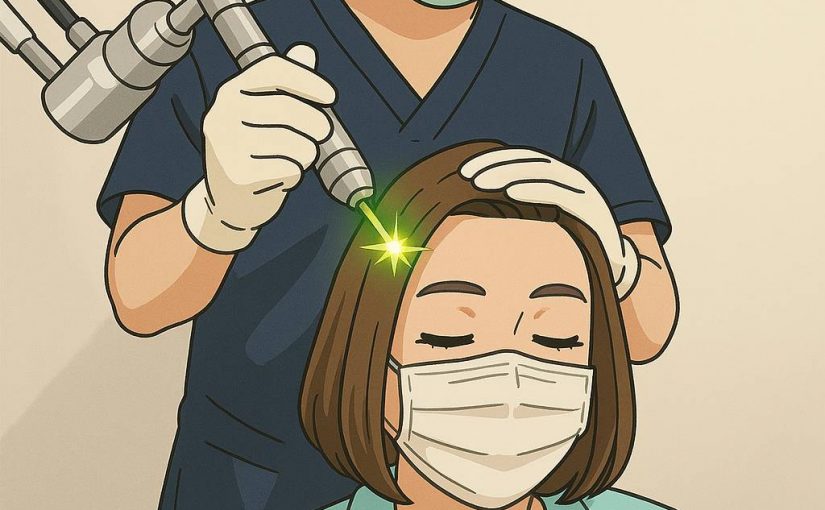
– Consult a hair and scalp specialist for proper diagnosis and treatment: With tools like microscopic scalp analysis and treatments such as Fractional Laser or Hair Mesotherapy.

Conclusion

Hair thinning and hair loss can affect anyone. Aging is a common contributor. By nurturing your body from within, avoiding harmful external factors, and starting early treatment, you can maintain beautiful, youthful hair for years to come.

Hair and Scalp Aging

Hair Aging: ผมร่วงผมบางจากการเสื่อมตามวัย

เปิดเบื้องหลัง ‘ความงามจากราก’ กับปรากฏการณ์ Hair Aging” และวิธีดูแลหนังศีรษะให้คงความอ่อนเยาว์

เมื่อ “หนังศีรษะ” เริ่มแก่… “เส้นผม” ก็เริ่มจากลา

เราคุ้นเคยกับการบำรุงผิวหน้าให้ดูอ่อนเยาว์ หลีกเลี่ยงริ้วรอยและความหย่อนคล้อย แต่คุณรู้หรือไม่ว่า “หนังศีรษะ” ก็เสื่อมสภาพไปตามวัยได้เช่นกัน และการเปลี่ยนแปลงเล็กๆ ที่มองไม่เห็นนี้ อาจเป็นต้นตอสำคัญที่ทำให้คุณเริ่มมีเส้นผมบางลง แห้ง หงอก หรือหลุดร่วงง่ายขึ้นเรื่อยๆ

Hair Aging: เส้นผมที่อ่อนแอ อาจไม่ใช่แค่กรรมพันธุ์

แม้พันธุกรรมจะมีส่วนกำหนดลักษณะเส้นผม แต่การเปลี่ยนแปลงที่มาจาก “สภาพแวดล้อมของรูขุมขน” มีผลมากกว่าที่คิด! เมื่อหนังศีรษะแก่ลง ไม่ว่าจะเพราะวัย มลภาวะ หรือฮอร์โมนที่เปลี่ยนไปหลังวัยหมดประจำเดือน รูขุมขนก็จะเริ่มอ่อนแรง ทำงานช้าลง ผลิตเส้นผมที่บางลง เส้นเล็กลง หรือวงจรการงอกของผมหยุดชะงัก

สัญญาณเตือน…หนังศีรษะกำลังเข้าสู่วัยทอง

  • เส้นผมเริ่มบางลง
  • หนังศีรษะแห้ง ลอก หรือไวต่อสิ่งกระตุ้น
  • เส้นผมขึ้นใหม่ช้าลง หรือขึ้นแบบเส้นเล็กๆ บางๆ
  • เริ่มมีอาการผมหงอกก่อนวัย
  • รู้สึกว่าผมลีบแบน ไม่มีวอลลุ่ม แม้สระแล้ว

หนังศีรษะแก่ เกิดจากอะไร?

  • อายุที่เพิ่มขึ้น: ทำให้เนื้อเยื่อรอบรูขุมขนฝ่อ ตัวรูขุมขนเล็กลง
  • ฮอร์โมนลดลง: โดยเฉพาะเอสโตรเจนในผู้หญิง ส่งผลให้หนังศีรษะแห้ง ขาดความยืดหยุ่น
  • แสงแดดและมลภาวะ: ทำให้เกิดการอักเสบเล็กๆที่หนังศีรษะและรูเส้นผม มีอนุมูลอิสระทำลายคอลลาเจนในหนังศีรษะ
  • การดูแลผมไม่เหมาะสม: เช่น การใช้แชมพูรุนแรง ดัด ย้อม รีดบ่อยๆ โดยไม่บำรุง
  • ขาดสารอาหาร: เช่น วิตามินบี, วิตามินD, แร่ธาตุและกรดอะมิโนที่จำเป็นต่อเส้นผม

ฟื้นฟู “หนังศีรษะวัยทอง” ให้กลับมาเปล่งปลั่งเหมือนวัยเยาว์

  • เลือกใช้แชมพูและครีมนวดที่ออกแบบมาสำหรับหนังศีรษะ
    เนื่องจากเป็นผลิตภัณฑ์ที่ต้องใช้เป็นประจำ จึงควรเลือกชนิดที่เป็นออร์แกนิกจากธรรมชาติ ปราศจากสารซัลเฟต ปราศจากสารซิลิโคน ปราศจากน้ำหอมสังเคราะห์ ปราศจากสารเตมีกันบูด ซึ่งมักก่อให้เกิดการระคายเคืองต่อรูรากผมและหนังศีรษะ
  • เลือกรับประทานอาหารที่ดีต่อเส้นผม
    เช่น ปลาแซลมอน, ถั่วเปลือกแข็ง, ผักใบเขียวเข้ม, ไข่ และธัญพืชเต็มเมล็ด
  • ลดความเครียดและพักผ่อนให้เพียงพอ
    เพราะฮอร์โมนความเครียดมีผลโดยตรงต่อวงจรเส้นผม
  • ออกกำลังกายอย่างสม่ำเสมอ

การออกกำลังกายช่วยให้เลือดไหลเวียนดี, ช่วยลดความเครียด และช่วยปรับสมดุลฮอร์โมน

  • เลือกรับประทานผลิภัณฑ์เสริมอาหารที่ช่วยบำรุงเส้นผม

เช่น วิตามินบี วิตามิมบี วิตามินดี สังกะสี และกรดอะมิโน

  • เลือกรับประทานผลิภัณฑ์จากธรรมชาติที่ช่วยเพิ่มการไหลเวียนเลือดสู่รากผม

เช่น กลุ่มยาบำรุงเลือด

  • ปรึกษาแพทย์ผู้เชี่ยวชาญเพื่อตรวจวิเคราะห์และรักษาอย่างเหมาะสม

เพื่อตรวจวิเคราะห์ด้วยกล้องไมโครสโครป และการรักษาที่เหมาะสม เช่นเลเซอร์(Fractional Laser), โมโสสำหรับเส้นผม (Hair Mesotherapy)


บทสรุป

ผมร่วงผมบางสามารถเกิดขึ้นได้กับทุกคน ความเสื่อมตามวัยเป็นสาเหตุหนึ่งที่พบได้บ่อย การดูแลรักษาสุขภาพจากภายใน การหลีกเสี่ยงสารอันตรายจากภาพนอก และการรีบดูแลรักษาให้เร็วที่สุดจะช่วยให้คุณมีผมสวยดูอ่อนเยาว์ตลอดไป

Hair and Scalp Aging (Jp)

ヘアエイジング:加齢による薄毛と抜け毛

「根元からの美しさ」——“ヘアエイジング”という現象と、頭皮の若さを保つ方法を探る

頭皮の老化が始まると…髪も静かに抜けていく

私たちは肌のシワやたるみを防ぐためにフェイシャルケアをしますが、頭皮もまた加齢によって老化することをご存知でしょうか?この目に見えにくい変化が、髪のボリューム減少、乾燥、白髪、抜け毛といった問題の大きな原因となっているのです。

ヘアエイジング:髪の弱りは遺伝だけが原因ではない

髪質は遺伝の影響を受けますが、実はそれ以上に毛根を取り巻く環境が大きな要因です。加齢、ホルモンの変化(特に閉経後)、大気汚染などによって頭皮が老化すると、毛根が弱まり、髪の成長が遅くなり、細くなったり、生えなくなったりしてしまいます。

頭皮のエイジングサイン

– 髪が薄くなってきた
– 頭皮が乾燥し、フケが出たり敏感になった
– 新しく生える髪が細く、量も少ない
– 若くして白髪が増え始めた
– 洗髪後も髪がペタンとしてボリュームがない

頭皮老化の主な原因

– 加齢:毛包の周囲組織が萎縮し、毛穴が小さくなる
– ホルモンの減少:特に女性のエストロゲン低下が頭皮の乾燥や弾力低下を引き起こす
– 紫外線と大気汚染:頭皮や毛根に炎症を起こし、活性酸素がコラーゲンを破壊する
– 不適切なヘアケア:強いシャンプーや頻繁なカラーリング・アイロンなどがダメージを与える
– 栄養不足:ビタミンB群、ビタミンD、亜鉛、必須アミノ酸の不足

エイジング頭皮を若返らせる方法

– 頭皮にやさしいシャンプーとコンディショナーを選ぶ:天然由来のオーガニック製品で、硫酸塩・シリコン・合成香料・保存料が無添加のものが理想です。
– 髪に良い食事を心がける:サーモン、ナッツ、濃い緑の葉野菜、卵、全粒穀物などがおすすめです。
– ストレスを減らし、十分な休息をとる:ストレスホルモンは毛周期に直接影響します。
– 定期的な運動:血行促進・ストレス軽減・ホルモンバランスの改善に効果があります。
– 髪に良いサプリメントを摂取する:ビタミンB群、ビタミンD、亜鉛、アミノ酸など。
– 血流促進に効果のある天然成分を取り入れる:例:血流を促す漢方薬や植物成分など。
– 専門医に相談する:顕微鏡による頭皮診断や、フラクショナルレーザー、ヘアメソセラピーなど、適切な治療を受けましょう。

結論

薄毛や抜け毛は誰にでも起こり得ます。加齢はよくある原因のひとつです。体の内側からのケア、有害物質を避ける外側からの対策、そしてできるだけ早めの対処が、若々しく美しい髪を保つカギとなります。

Mechanisms of Hair Stimulation Using Fractional Laser for Androgenetic Alopecia(TH)

กลไกการกระตุ้นเส้นผมด้วย Fractional Laser สำหรับ Androgenetic Alopecia

Androgenetic Alopecia (AGA) หรือภาวะผมบางจากพันธุกรรม เป็นปัญหาที่พบได้บ่อยทั้งในผู้ชายและผู้หญิง มีสาเหตุมาจากฮอร์โมนแอนโดรเจนและความไวของรากผมต่อ DHT (dihydrotestosterone) ซึ่งส่งผลให้วงจรการเจริญเติบโตของเส้นผมสั้นลง และรากผมหดเล็กลงเรื่อย ๆ จนเกิดอาการผมบางอย่างเห็นได้ชัด

ในช่วงหลังมานี้ เทคโนโลยีเลเซอร์ โดยเฉพาะ Fractional Laser ได้รับความสนใจเพิ่มขึ้นในฐานะทางเลือกในการรักษา AGA โดยไม่ใช้ยา เนื่องจากพบว่าเลเซอร์สามารถกระตุ้นให้รากผมที่อ่อนแอฟื้นตัว และกระตุ้นให้เกิดการงอกใหม่ของเส้นผมได้อย่างมีประสิทธิภาพ

Fractional Laser คืออะไร?

Fractional Laser คือเลเซอร์ที่ปล่อยพลังงานลงไปใต้ผิวหนังเป็นจุดเล็ก ๆ แบบเป็นตาข่าย (fractionated beam) โดยเว้นผิวหนังปกติไว้ระหว่างจุดที่ได้รับพลังงาน ซึ่งจะทำให้เกิดแผลเล็ก ๆ ในระดับไมโครบริเวณที่ยิงเลเซอร์ ส่งผลให้เกิดกระบวนการซ่อมแซมผิวหนังโดยธรรมชาติ และกระตุ้นกระบวนการฟื้นฟูในระดับเซลล์

ประเภทของ Fractional Laser

เลเซอร์ชนิด Fractional ที่ใช้ในการกระตุ้นเส้นผมมีหลายชนิด โดยแต่ละชนิดมีความรุนแรงและระดับประสิทธิภาพที่แตกต่างกัน เนื่องจากผู้ที่มีภาวะผมร่วง ผมบาง มักมีหนังศีรษะที่ไวต่อการกระตุ้น การเลือกใช้เลเซอร์ที่อ่อนโยนจึงเป็นสิ่งสำคัญ เพื่อป้องกันการระคายเคืองหรือผลข้างเคียงต่อหนังศีรษะ

กลไกที่ช่วยกระตุ้นเส้นผม

  1. การสร้าง Microthermal Zones (MTZs)
    Fractional Laser ทำให้เกิดบาดแผลขนาดเล็กระดับไมโครใต้ผิวหนัง หรือที่เรียกว่า Microthermal Zones ซึ่งกระตุ้นให้ร่างกายเข้าสู่กระบวนการซ่อมแซม (wound healing cascade) พร้อมปล่อยสารสื่อกลางต่าง ๆ เช่น growth factors และ cytokines ที่ช่วยกระตุ้นรากผมให้อยู่ในระยะเจริญเติบโต (anagen phase)
  2. กระตุ้นเซลล์ต้นกำเนิด (Stem Cells) รอบรากผม
    เลเซอร์สามารถกระตุ้นบริเวณ bulge area ซึ่งเป็นที่อยู่ของ stem cells ภายในรากผม ส่งผลให้เกิดการสร้างเซลล์ใหม่ที่สามารถผลิตเส้นผมใหม่ที่แข็งแรงและมีคุณภาพมากขึ้น
  3. เพิ่มการไหลเวียนเลือดในหนังศีรษะ
    ผลของการอักเสบเล็กน้อยที่เกิดจากเลเซอร์ช่วยขยายหลอดเลือดในหนังศีรษะ ทำให้รากผมได้รับออกซิเจนและสารอาหารมากขึ้น เสริมสร้างความแข็งแรงของเส้นผม และช่วยยืดอายุของผมในระยะเจริญเติบโต
  4. เพิ่มการดูดซึมยา และประสิทธิภาพของยาร่วมรักษา
    การทำเลเซอร์ก่อนทายาหรือทำเมโสเธอราปี (mesotherapy) ช่วยให้ตัวยาซึมเข้าสู่ผิวหนังได้ดีขึ้น ทำให้การรักษาโดยรวมมีประสิทธิภาพมากขึ้น ตัวยาที่ใช้ควรเลือกให้เหมาะสมกับสภาพหนังศีรษะ โดยเน้นสารสกัดจากธรรมชาติหรือ growth factors ที่ไม่ก่อให้เกิดการระคายเคือง

ใครเหมาะกับการรักษาด้วย Fractional Laser?

  • ผู้ที่มีผมบางจากพันธุกรรมทุกระยะ
    ไม่ว่าจะอยู่ในระยะเริ่มต้นหรือระยะลุกลาม การใช้ Fractional Laser สามารถช่วยฟื้นฟูรากผมและปรับสมดุลหนังศีรษะได้
  • ผู้ที่ต้องการหลีกเลี่ยงผลข้างเคียงจากยารับประทาน
    เช่น Finasteride, Dutasteride หรือ Minoxidil ที่อาจก่อให้เกิดผลข้างเคียง Fractional Laser เป็นทางเลือกที่ปลอดภัยและไม่รบกวนระบบฮอร์โมน
  • ผู้ที่มองหาวิธีการที่ปลอดภัยและไม่ต้องพักฟื้น
    Fractional Laser เป็นหัตถการที่ไม่ต้องผ่าตัด ไม่มีบาดแผลเปิด และสามารถใช้ชีวิตตามปกติได้ทันทีหลังทำ
  • ผู้ที่วางแผนปลูกผมหรือเพิ่งปลูกผม
    การทำเลเซอร์ช่วยเร่งการฟื้นตัวของรากผมใหม่ และเพิ่มอัตราการอยู่รอดของเส้นผมที่ปลูก

สรุป

Fractional Laser ไม่เพียงแต่ช่วยฟื้นฟูสภาพผิว แต่ยังเป็นนวัตกรรมที่สำคัญในการรักษาผมร่วงจากพันธุกรรม โดยกระตุ้นกระบวนการซ่อมแซมตามธรรมชาติของร่างกาย กระตุ้นเซลล์ต้นกำเนิด และเพิ่มการไหลเวียนเลือดในหนังศีรษะ ซึ่งล้วนแล้วแต่ส่งผลต่อการงอกใหม่ของเส้นผม

หากได้รับการดูแลอย่างต่อเนื่อง ร่วมกับการใช้ผลิตภัณฑ์ที่เหมาะสมและดูแลสุขภาพหนังศีรษะอย่างครบวงจร จะช่วยให้เส้นผมกลับมาแข็งแรง หนาขึ้น และลดการหลุดร่วงในระยะยาว

ข้อมูลทางคลินิกจากการติดตามผลการรักษาที่ Piyawat Clinic

ผลการติดตามการรักษาที่ Piyawat Clinic พบว่า:

  1. ผู้ที่ได้รับการรักษาด้วย Fractional Hair Laser ร่วมกับ Meso Hair มีปริมาณเส้นผมเพิ่มขึ้นอย่างมีนัยสำคัญทางสถิติ เมื่อเทียบกับผู้ที่ได้รับการรักษาด้วย Meso Hair เพียงอย่างเดียว
  2. ผู้ที่ได้รับการรักษาด้วย Fractional Hair Laser ร่วมกับ Meso Hair มีการงอกของเส้นผมใหม่ในบริเวณที่ไม่มีรูขุมขนเดิม (ช่องว่างระหว่างรูขุมขน) มากกว่ากลุ่มที่ทำ Meso Hair เพียงอย่างเดียว อย่างมีนัยสำคัญทางสถิติ

Mechanisms of Hair Stimulation Using Fractional Laser for Androgenetic Alopecia

Androgenetic alopecia (AGA) is a common condition that causes hair thinning in both men and women. It is primarily driven by androgen hormones and the sensitivity of hair follicles to dihydrotestosterone (DHT), which shortens the hair growth cycle and leads to gradual miniaturization of hair follicles, resulting in visibly thinner hair.

In recent years, laser technology, particularly fractional lasers, has gained popularity as a non-pharmaceutical treatment option for AGA. Studies have shown that laser stimulation can effectively rejuvenate dormant hair follicles and promote new hair growth.

What Is a Fractional Laser?

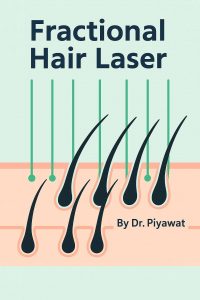
Fractional lasers emit energy in a fractionated pattern—tiny beams that penetrate the deeper layers of the skin while leaving surrounding tissue intact. This creates microscopic wounds (microthermal zones), which trigger a natural healing response that encourages tissue repair and regeneration.

Types of Fractional Lasers

There are several types of fractional lasers used for hair stimulation, each varying in intensity and effectiveness. Since individuals with hair thinning often have sensitive scalps, it is important to choose a gentle laser system to avoid unnecessary irritation.

Mechanisms That Promote Hair Growth

  1. Microthermal Zones (MTZs):
    Fractional laser beams create microscopic thermal injury zones in the scalp. These trigger a wound-healing cascade that releases various signaling molecules such as growth factors and cytokines, which help reactivate weakened hair follicles and return them to the anagen (growth) phase.
  2. Stimulation of Stem Cells Around Hair Follicles:
    Fractional lasers stimulate the bulge area of the follicle, where hair follicle stem cells reside. This promotes the repair of miniaturized follicles and the formation of new, healthy hair strands.
  3. Increased Scalp Blood Circulation:
    Mild inflammation caused by the laser leads to vasodilation and increased blood flow to the scalp. This enhances the delivery of oxygen and nutrients to the hair roots, strengthening the hair and extending the anagen phase.
  4. Improved Absorption and Efficacy of Topical Treatments:
    Fractional laser treatment increases scalp permeability, improving the absorption of topical products or mesotherapy solutions. This synergy enhances overall treatment effectiveness. For best results, gentle, non-irritating formulations—such as natural extracts and growth factors—are recommended.

Who Is Fractional Laser Treatment Suitable For?

  • Anyone with Genetic Hair Thinning:
    Whether in early or advanced stages, fractional lasers can help restore hair follicle function and improve scalp health.
  • Individuals Avoiding Side Effects from Oral Medications:
    For those concerned about side effects from medications like finasteride, dutasteride, or minoxidil, fractional laser is a safe and effective alternative.
  • People Looking for a Safe, Low-Downtime Option:
    As a non-surgical procedure, fractional laser treatment requires minimal recovery time and allows patients to return to their daily routines quickly.
  • Post–Hair Transplant Patients or Those Planning Hair Transplants:
    Laser therapy can be used before or after a transplant to support recovery and improve the growth and survival of transplanted follicles.

Summary

Fractional lasers are not only effective for skin rejuvenation but also play a key role in hair restoration for AGA patients. They activate biological repair mechanisms, stimulate stem cells, and improve scalp blood flow—all contributing to enhanced hair growth.

Ongoing laser treatment, in combination with a holistic care regimen and appropriate therapeutic agents, can significantly improve hair density, strength, and retention.

Clinical Observations from Piyawat Clinic

Clinical tracking at Piyawat Clinic has revealed important findings regarding the effectiveness of fractional hair laser therapy:

  1. Patients treated with fractional hair laser combined with Meso Hair showed significantly greater hair growth compared to those who received mesotherapy alone, with statistically significant results.
  2. New hair was observed growing from previously empty follicular areas (inter-follicular spaces) in patients treated with fractional hair laser + Meso Hair, more prominently than in those treated with mesotherapy alone—again, with statistical significance.


揭示真相:为什么色斑治疗并非对所有人都有效?Melasma CN


色斑可以淡化,但目前没有任何方法能保完全消

许多人尝试治疗色斑,但往往发现色斑在短时间内变淡后,又逐渐加深。无论是昂贵的美白护肤品、先进的激光治疗,还是各种保健品,色斑仍然难以彻底去除。

目前,没有任何治方法可以完全保色斑底消失。 但通过正确的治疗方法和持续的皮肤护理,可以明显改善色斑,并有效控制其复发。

那么,什么有些人的色斑治效果很好,而有些人却效果不佳? 如何才能让色斑淡化,并防止其复发呢?

1. 续护肤是防止色斑复的关

色斑不是一次性可以底治愈的,持续护理至关重要!

✔️ 选择含有修复成分的美白,既能淡化色素沉淀,又能增强皮肤屏障,提高皮肤的抵抗力。
✔️ 防晒是最关的一步,因为紫外线是色斑加重的主要诱因。
✔️ 选择天然品,确保安全性,特别是对于有小孩的母亲来说,一些护肤品中的化学成分可能会残留在皮肤上,并接触到孩子的肌肤。

如果不肤,即使色斑已经变淡,也很容易再次加深。

2. 选择合适的激光治,并确保设备USFDA认证

激光治疗是加速色斑淡化的有效方法,但并非所有激光设备都能达到理想的治疗效果。应选择合适的技,并确保设备得美国食品督管理局(USFDA认证,以保安全性和治效果。

✔️ 新一代激光设备,特是具备Toning模式的激光,不仅能减少色素沉着,还能刺激胶原蛋白生成,使肌肤更加细腻、光滑、透亮。
✔️ 均匀肤色,淡化色斑,皮肤恢复自然亮
✔️ 过USFDA认证的激光设备可减少副作用,例如避免灼伤或治疗后出现色素沉淀的问题。

不要选择价格低或未经认证的激光设备,否可能会致色斑加重,而不是改善。

3. 医生的专业术对色斑治效果至关重

色斑的激光治仅仅取决于设备取决于医生的专业技能!

✔️ 经验丰富的医生能精准整激光能量,确保色斑逐淡化,而不会损伤皮肤。
✔️ 医生的专业分析可帮助制定最适合个体肤的治方案。
✔️ 专业的皮肤科医生能最大程度地减少副作用,使治更安全、更高效。

选择专业的皮肤科医生行色斑治,才能得最佳效果!

4. 30?必从内在理,增皮肤健康,减少色

随着年龄增长,皮肤的自我修复能力逐渐减弱,调节色素的能力下降,导致色斑更容易形成。除了外在肤,内在理同重要!

✔️ 取富含天然修复成分的胶原蛋白,有助于增皮肤性,减少色斑的形成。
✔️ 选择天然,如Blood Tonic,可以帮助调节身体内部机能,平衡荷尔蒙,改善肤色。
✔️ 取富含生素C和抗氧化物的食物,如浆果类水果、西红柿和绿茶,有助于减少自由基对皮肤的损害,从而降低色斑形成的风险。

5. 激光治的副作用?通常微且可

✔️ 后皮肤可能会有微干燥,但使用保湿霜可解不适。
✔️ 如果某些部位需要高能量的激光,可能会出现暂时性色素沉淀,但通常会随着皮肤代消退。
✔️ 如果出任何异常情况,皮肤科医生。

总结:如何有效治色斑并防止其复

持使用含修复成分的美白肤品,并每天做好防晒。
选择USFDA认证的激光治疗设备,确保安全性。
专业医生的指行治,降低副作用风险
关注外部肤的同,也要从内部理身体。
选择天然肤品,以确保安全性。

色斑是可以淡化的!只要选择正确的治方法,并肤,就能有效改

如果您想了解更专业的色斑治疗方案,建议咨询皮肤科专家,为您的肌肤制定最合适的治疗方案!

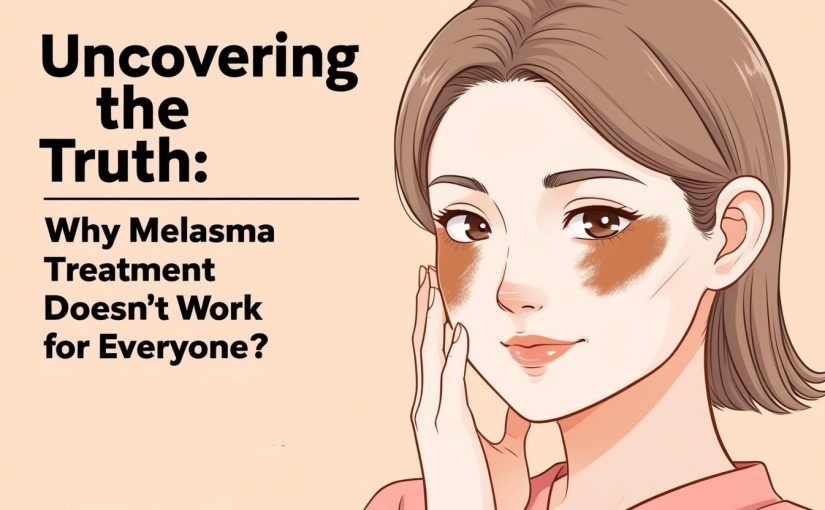
The Truth Revealed: Why Melasma Treatment Doesn’t Work for Everyone?

Melasma Can Fade, But No Treatment Can Guarantee Complete Removal

Many people try to treat melasma, only to find that it fades for a while and then darkens again. No matter how expensive the whitening cream, how advanced the laser technology, or how effective the supplements are, melasma often persists.

Currently, there is no treatment that can guarantee the complete removal of melasma. However, with the right approach, melasma can be significantly reduced, and its recurrence can be controlled with consistent skincare and proper treatment methods.

Let’s explore why melasma treatment works for some people but not for others and how you can achieve better, long-lasting results.

1. Consistent Skincare Is Key to Preventing Melasma Recurrence

Melasma is not a one-time fix. Continuous skincare is essential!

✔️ Choose a whitening cream that contains skin-repairing ingredients to help fade pigmentation while strengthening the skin barrier.
✔️ Sunscreen is the most crucial factor since UV rays are a major trigger for melasma recurrence.
✔️ Opt for natural skincare products for safety, especially for mothers with young children, as some chemical ingredients may transfer to the child upon skin contact.

If skincare is neglected, melasma will inevitably darken again, even after successful treatment.

2. The Right Laser Treatment with USFDA Approval Can Speed Up Melasma Fading

Laser treatments can significantly speed up melasma reduction, but not all lasers are equally effective. It is essential to choose a laser with suitable technology that is USFDA-approved to ensure both safety and effectiveness.

✔️ New-generation lasers with Toning Mode not only reduce pigmentation but also stimulate collagen production, improving skin smoothness and radiance.
✔️ Helps even out skin tone and reduce dark spots
✔️ USFDA-approved lasers minimize risks of side effects such as burns or post-inflammatory hyperpigmentation.

Avoid cheap, uncertified laser devices as they may worsen melasma instead of improving it.

3. A Dermatologist’s Expertise Directly Impacts Treatment Success

Melasma laser treatment is not just about the machine—it’s about the skill of the doctor!

✔️ An experienced dermatologist knows how to adjust laser energy levels to fade melasma without damaging the skin.
✔️ A proper skin analysis is crucial in determining the best treatment approach.
✔️ A skilled doctor can minimize side effects and tailor the treatment for each individual.

To achieve the best results, choose a clinic with board-certified dermatologists who specialize in melasma treatment.

4. Over 30? Internal Skincare Is Just as Important for Melasma Reduction

As we age, skin regeneration slows down, and the ability to regulate pigmentation decreases, making melasma more likely to develop. Internal skincare is just as important as external care.

✔️ Taking collagen with natural skin-nourishing ingredients helps strengthen the skin and reduce melasma.
✔️ Incorporating natural supplements like Blood Tonic can support overall health, balance hormones, and improve skin condition.
✔️ Eating foods rich in vitamin C and antioxidants such as berries, tomatoes, and green tea can help protect the skin from oxidative stress and melasma triggers.

5. Laser Side Effects? They Are Rare and Manageable

✔️ Mild dryness after laser treatment can be easily relieved with a good moisturizer.
✔️ Some areas requiring higher laser energy may develop temporary dark spots after pigment flaking.
✔️ If any concerns arise, consult your dermatologist immediately.

Summary: How to Effectively Treat and Prevent Melasma Recurrence

Consistent skincare with whitening products and daily sunscreen is essential.
Choose a certified laser treatment that is USFDA-approved.
Seek treatment from an experienced dermatologist to avoid complications.
Take care of your skin both externally and internally.
Opt for natural skincare products for safety.

Melasma Can Fade—If You Follow the Right Treatment Plan and Maintain Skincare Consistently!

If you need expert guidance on the best melasma treatment for your skin, consult a dermatologist today for a personalized approach!